
Growing Education
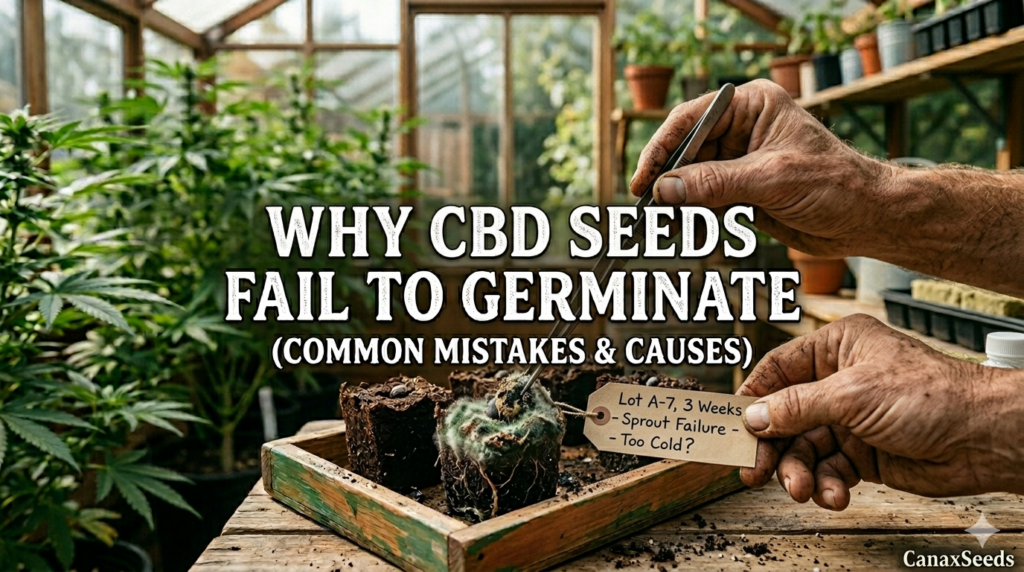
Why CBD Seeds Fail to Germinate
01
May
May
Common Causes of CBD Seed Germination Failure
CBD cannabis seeds are bred specifically for high cannabidiol content, making them ideal for medicinal growers and those seeking non-intoxicating effects. However, many growers still ask why CBD seeds fail to germinate. In most cases, the issue is not the CBD genetics themselves but early-stage environmental conditions, moisture control, or handling errors. CBD seeds can be either photoperiod or autoflower, but regardless of type, early germination success is critical to ensuring a healthy plant and maximizing CBD production throughout the lifecycle. This guide explains the most common reasons CBD cannabis seeds don’t sprout and how to fix them.What Healthy CBD Seed Germination Looks Like
Under ideal conditions, CBD seeds typically germinate within 24–72 hours. A small white taproot emerges, followed by a seedling breaking the surface within a few days. If CBD seeds fail to crack, stall, or rot, something in the early setup needs adjustment.Causes of CBD Seeds Not Germinating
1. Old or Low-Quality CBD Seeds
Seed age and genetic stability matter, even for CBD-focused strains. Signs of poor CBD seed viability:- Pale or underdeveloped shells
- Soft or brittle seeds
- Irregular size or shape
2. Overwatering During Germination
Overwatering is the most common reason CBD seeds fail to germinate.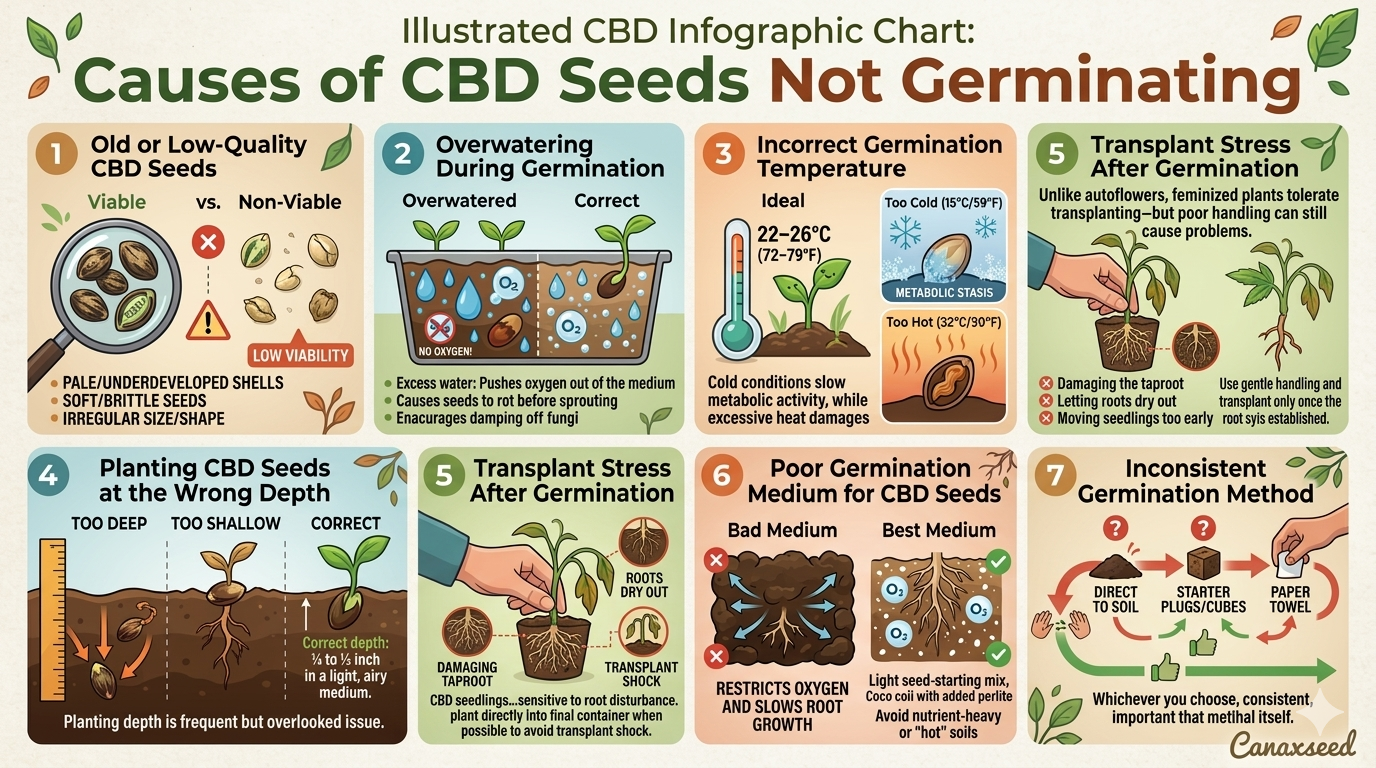 Excess moisture:
- Pushes oxygen out of the medium
- Causes seeds to rot before sprouting
- Encourages damping-off fungi
3. Incorrect Germination Temperature
CBD seeds germinate best in warm, stable environments. Ideal temperature range: 22–26°C (72–79°F) Temperatures below this range slow metabolic activity, while excessive heat can damage the embryo before sprouting begins.4. Planting CBD Seeds at the Wrong Depth
Planting depth is critical for early root development.- Too deep → seedling runs out of stored energy
- Too shallow → taproot dries out or is exposed
5. Transplant Stress After Germination
CBD seedlings, whether photoperiod or autoflower, can be sensitive to root disturbance. Common transplant mistakes:- Damaging the taproot
- Letting roots dry out
- Moving seedlings too early
6. Poor Germination Medium for CBD Seeds
Heavy or compact soil restricts oxygen and slows root growth. Best media for CBD seed germination:- Light seed-starting mix
- Coco coir
- Light soil with added perlite
7. Inconsistent Germination Method
Switching germination methods mid-process often leads to failure. Reliable methods for CBD seeds:- Direct-to-soil planting
- Starter plugs or cubes
- Paper towel method (used briefly before planting)
How to Improve CBD Seed Germination Success
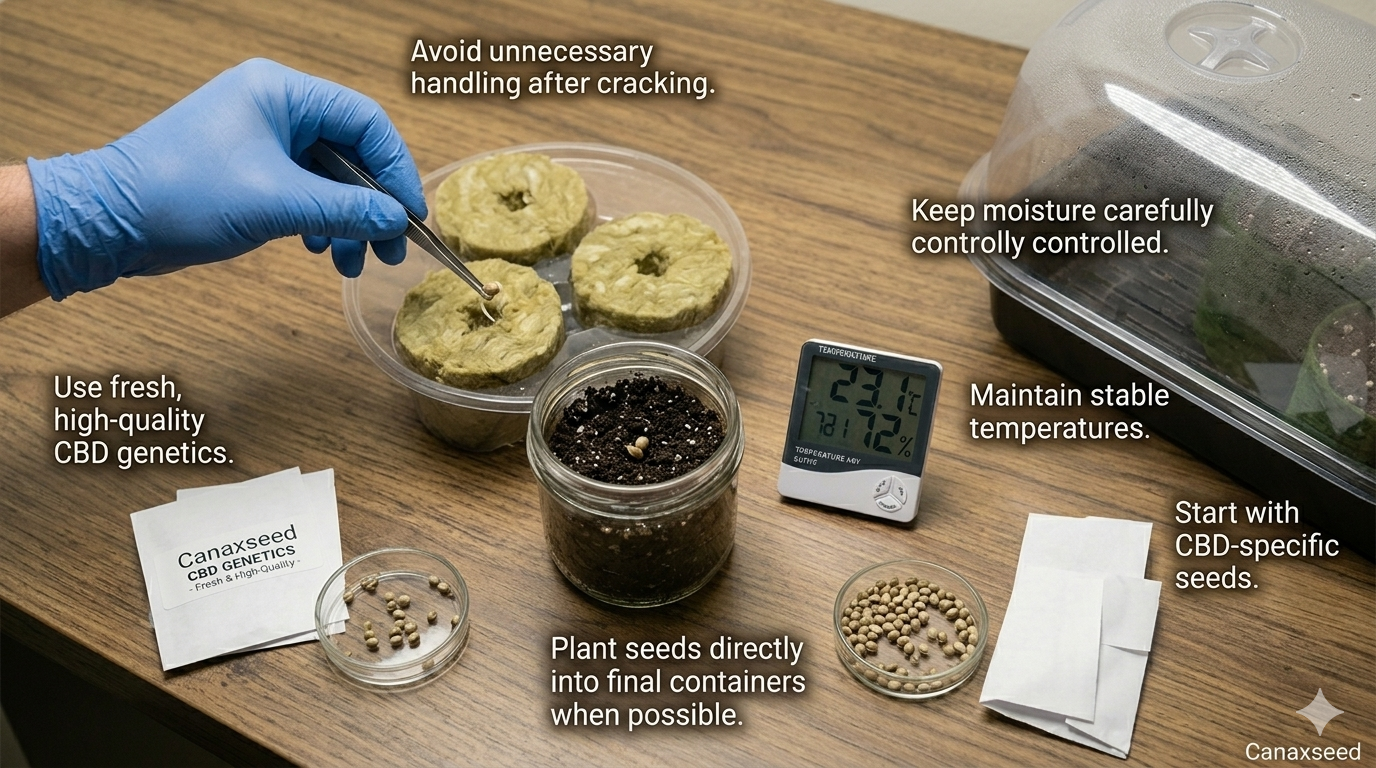
To increase success rates with CBD seeds:- Use fresh, high-quality CBD genetics
- Maintain stable temperatures
- Keep moisture carefully controlled
- Plant seeds directly into final containers when possible
- Avoid unnecessary handling after cracking
When a CBD Seed Is No Longer Viable
If a CBD seed hasn’t cracked after 7–10 days in ideal conditions, it’s likely non-viable. At that point, starting with a fresh seed is usually the best option.Final Thoughts on CBD Seed Germination Problems
When CBD seeds fail to germinate, the cause is almost always environmental factors, moisture issues, handling errors, or poor seed quality—not the CBD genetics themselves. With high-quality CBD cannabis seeds and proper germination techniques, sprouting is consistent and predictable, laying the foundation for strong, healthy plants that produce optimal cannabidiol levels throughout their growth cycle.