
Cannabis Seed Education
How to Avoid Mold and Mildew During Cannabis Seed Germination
01
May
May
Why Mold and Mildew Are a Problem for Seedlings
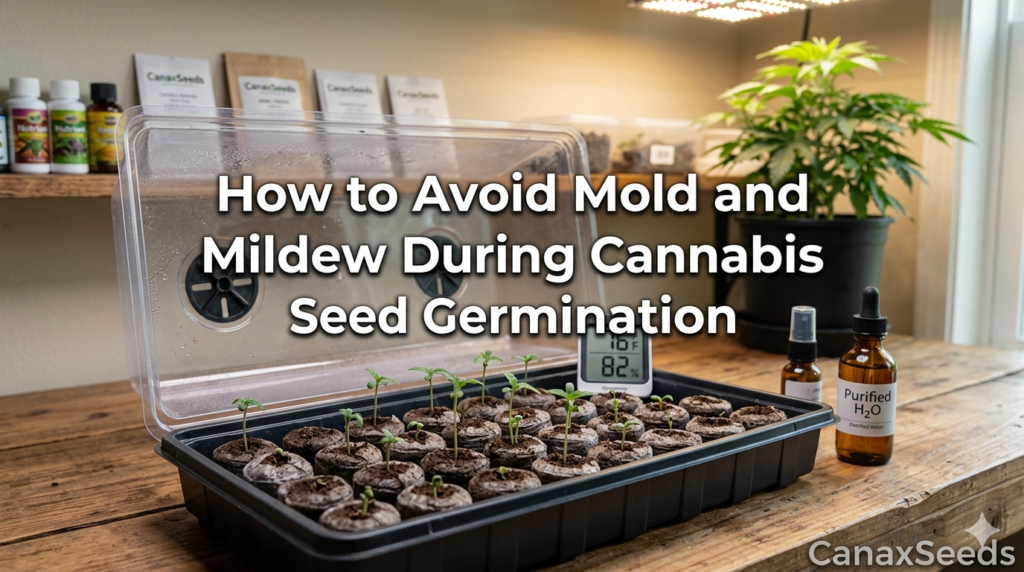
Cannabis seeds are vulnerable during germination because the taproot and seedling are delicate. Mold and mildew can quickly destroy seeds before they sprout, reducing germination rates and affecting early growth. Even our high-quality feminized or autoflower seeds can fail if germination conditions are too humid or unsanitary. Understanding how to prevent mold and mildew is essential for achieving a strong, healthy start to your grow cycle.Signs of Mold or Mildew on Germinating Seeds
- White, fuzzy growth: Often appears on the surface of the soil or on the seed itself.
- Discoloration: Seeds or seedlings may develop gray, black, or green patches.
- Foul odor: A sour or musty smell in the growing medium indicates fungal growth.
- Stalled germination: Seeds may crack but fail to develop a taproot or cotyledons.
Causes of Mold and Mildew During Germination
1. Excessive Moisture
- Overwatering reduces oxygen in the growing medium, creating ideal conditions for mold.
- Saturated paper towels or soil increase the risk of damping-off fungi.
- Maintain light, even moisture rather than constant wetness.
2. High Humidity
- Relative humidity above 70% encourages fungal growth on seeds and seedlings.
- Use humidity control techniques such as small ventilation gaps or desiccants.
- Keep the growing area stable and avoid enclosed, damp spaces.
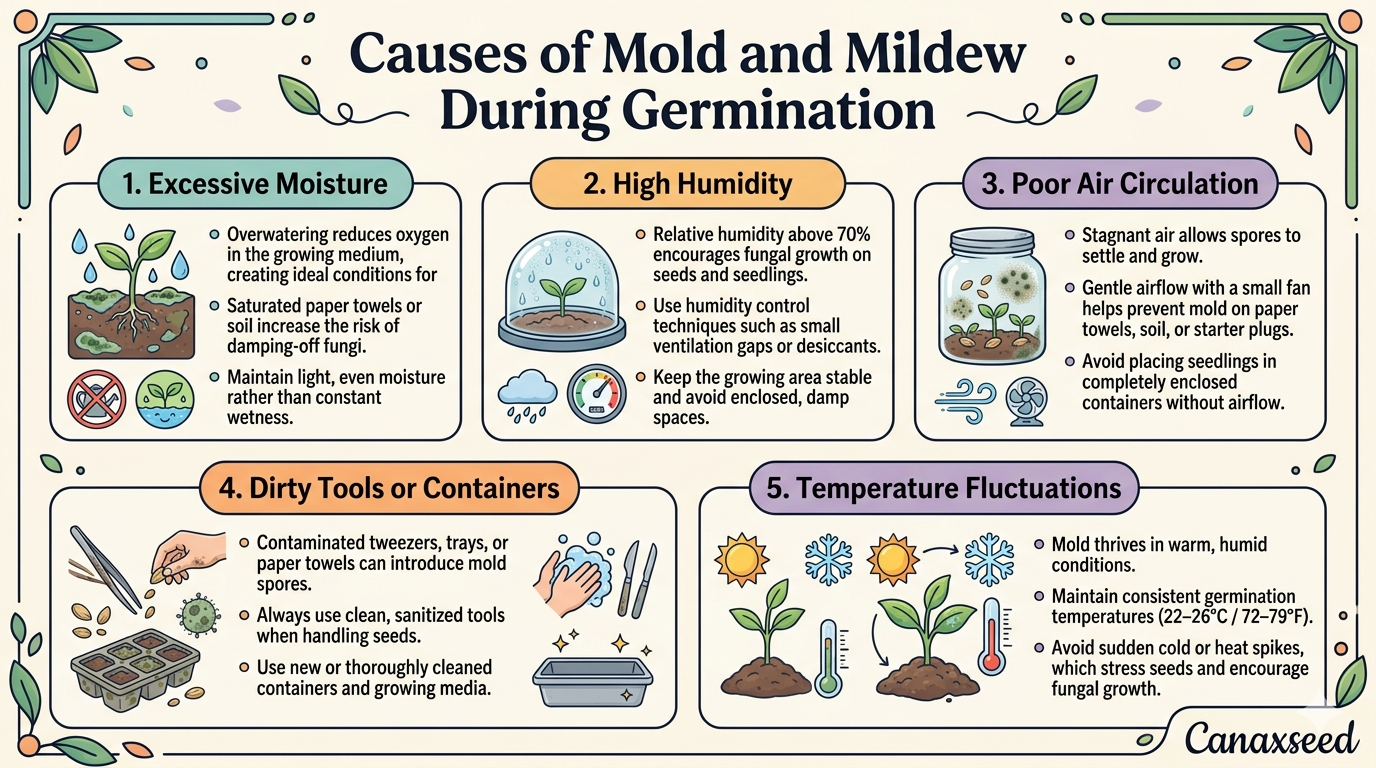
3. Poor Air Circulation
- Stagnant air allows spores to settle and grow.
- Gentle airflow with a small fan helps prevent mold on paper towels, soil, or starter plugs.
- Avoid placing seedlings in completely enclosed containers without airflow.
4. Dirty Tools or Containers
- Contaminated tweezers, trays, or paper towels can introduce mold spores.
- Always use clean, sanitized tools when handling seeds.
- Use new or thoroughly cleaned containers and growing media.
5. Temperature Fluctuations
- Mold thrives in warm, humid conditions.
- Maintain consistent germination temperatures (22–26°C / 72–79°F).
- Avoid sudden cold or heat spikes, which stress seeds and encourage fungal growth.
How to Prevent Mold and Mildew During Germination
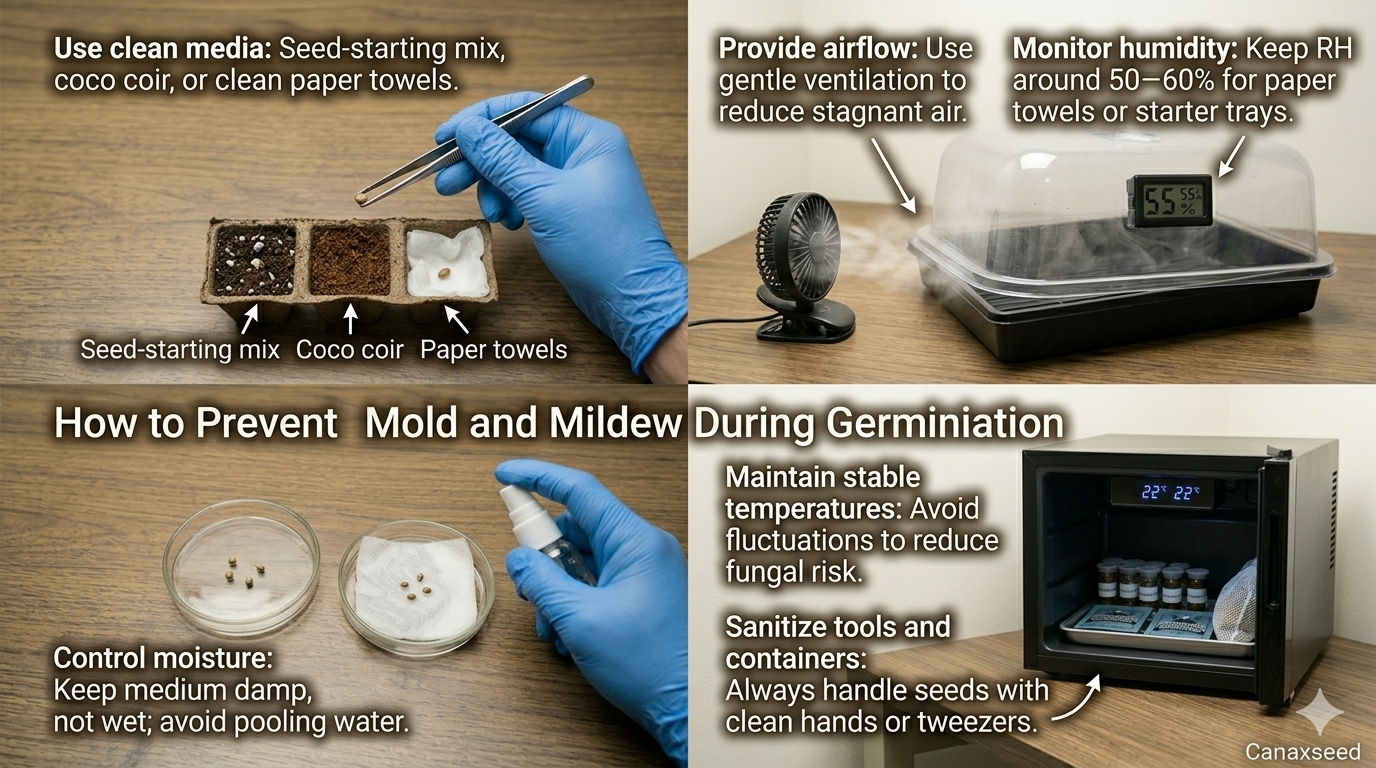
- Use clean media: Seed-starting mix, coco coir, or clean paper towels.
- Control moisture: Keep medium damp, not wet; avoid pooling water.
- Monitor humidity: Keep RH around 50–60% for paper towels or starter trays.
- Provide airflow: Use gentle ventilation to reduce stagnant air.
- Sanitize tools and containers: Always handle seeds with clean hands or tweezers.
- Maintain stable temperatures: Avoid fluctuations to reduce fungal risk.
Testing for Seed Health Before Germination
- Inspect seeds for cracks, mold spots, or discoloration.
- Conduct a float test: viable seeds usually sink, while immature seeds may float.
- Perform gentle pressure tests: firm seeds resist slight pressure; soft seeds may not sprout.
Final Thoughts
Mold and mildew are common but preventable problems during cannabis seed germination. By maintaining clean conditions, controlling moisture and humidity, ensuring gentle airflow, and monitoring temperature, growers can protect seeds and promote strong, healthy seedlings. Early prevention is key to maximizing germination success and setting the stage for a productive grow.