
Cannabis Seed Education
How to Properly Label Cannabis Seeds for Organized Growing
01
May
May
Why Labeling Cannabis Seeds Matters
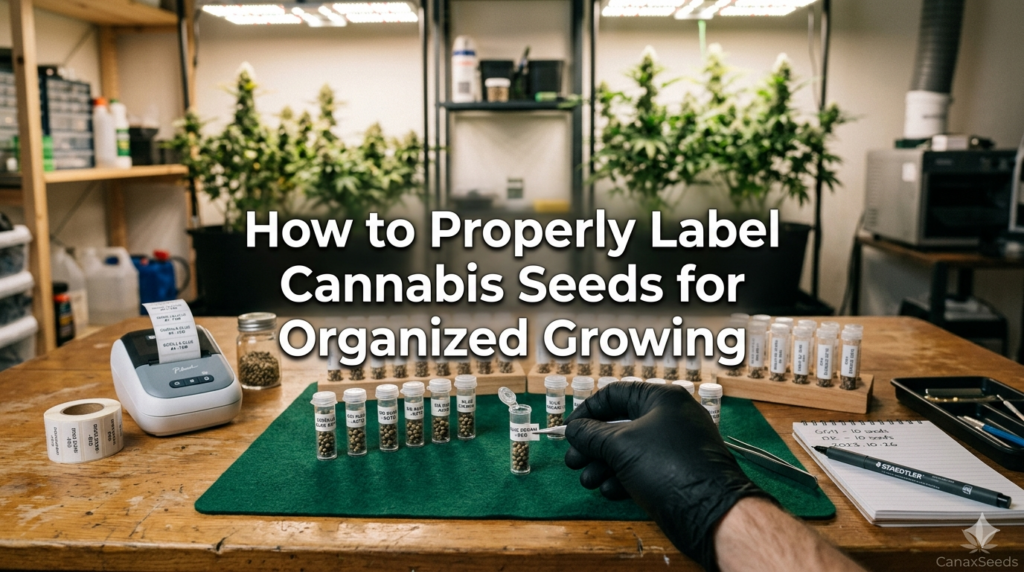
Properly labeling cannabis seeds is often overlooked by beginner growers, but it is critical for organization, tracking strain genetics, and preventing mistakes during germination. With so many varieties available—including autoflower, feminized, and CBD seeds—keeping accurate records ensures that each plant is grown under the correct conditions and harvested at the optimal time. Organized labeling also helps prevent accidental crossbreeding, mix-ups, and confusion during the early growth stages.Signs You Need Better Seed Labeling
- You have multiple strains in the same storage container.
- Seeds of different types (autoflower, feminized, CBD) are stored together.
- You forget the germination date or storage batch.
- Tracking strain characteristics like THC/CBD content or flowering time is difficult.
How to Label Cannabis Seeds Effectively
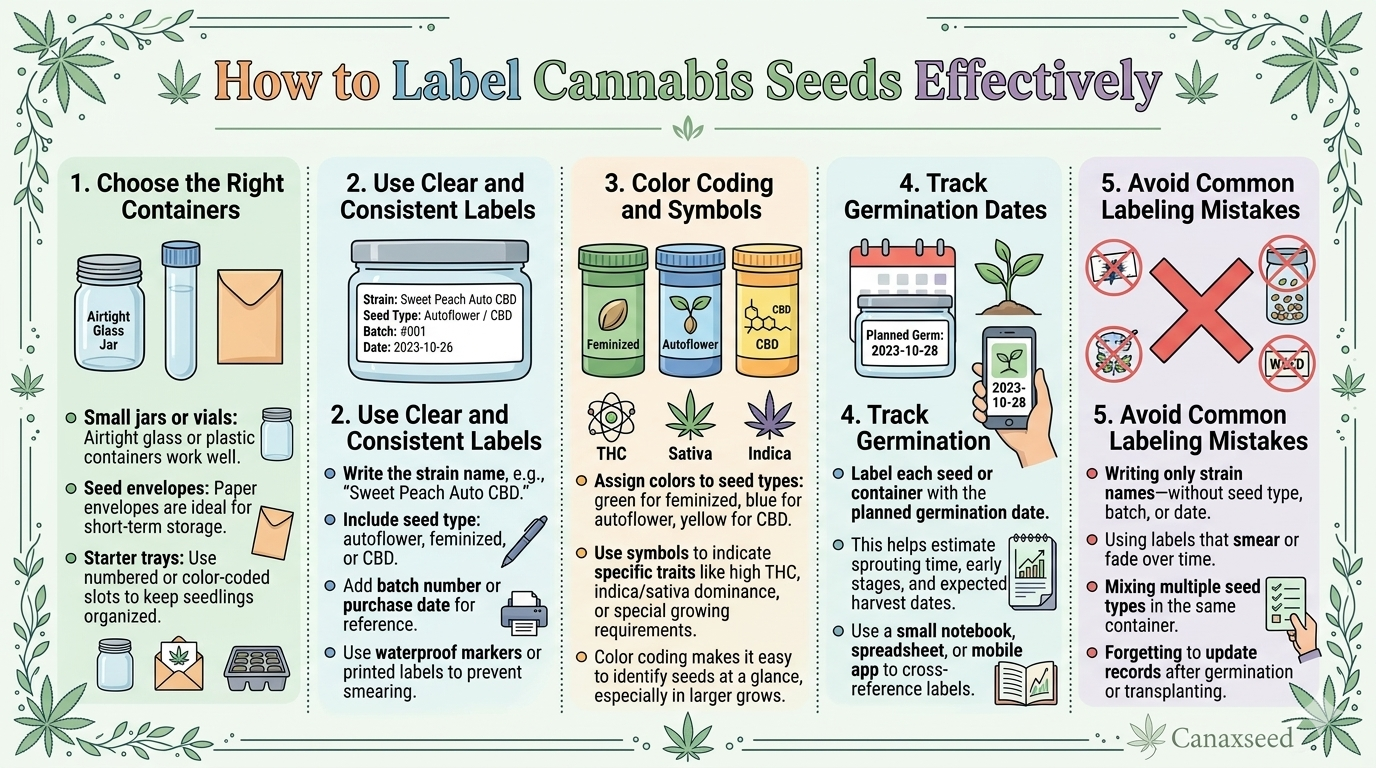
1. Choose the Right Containers
- Small jars or vials: Airtight glass or plastic containers work well.
- Seed envelopes: Paper envelopes are ideal for short-term storage.
- Starter trays: Use numbered or color-coded slots to keep seedlings organized.
2. Use Clear and Consistent Labels
- Write the strain name, e.g., “Sweet Peach Auto CBD.”
- Include seed type: autoflower, feminized, or CBD.
- Add batch number or purchase date for reference.
- Use waterproof markers or printed labels to prevent smearing.
3. Color Coding and Symbols
- Assign colors to seed types: green for feminized, blue for autoflower, yellow for CBD.
- Use symbols to indicate specific traits like high THC, indica/sativa dominance, or special growing requirements.
- Color coding makes it easy to identify seeds at a glance, especially in larger grows.
4. Track Germination Dates
- Label each seed or container with the planned germination date.
- This helps estimate sprouting time, early growth stages, and expected harvest dates.
- Use a small notebook, spreadsheet, or mobile app to cross-reference labels.
5. Avoid Common Labeling Mistakes
- Writing only strain names—without seed type, batch, or date.
- Using labels that smear or fade over time.
- Mixing multiple seed types in the same container.
- Forgetting to update records after germination or transplanting.
Labeling Tips for Autoflower and Feminized Seeds
- Autoflower seeds: Include expected flowering time and recommended container size; their internal clock means organization is crucial for harvesting on schedule.
- Feminized seeds: Track intended photoperiod and growth conditions; mislabeled feminized seeds can result in accidental male growth if cross-pollination occurs.
Benefits of Proper Cannabis Seed Labeling
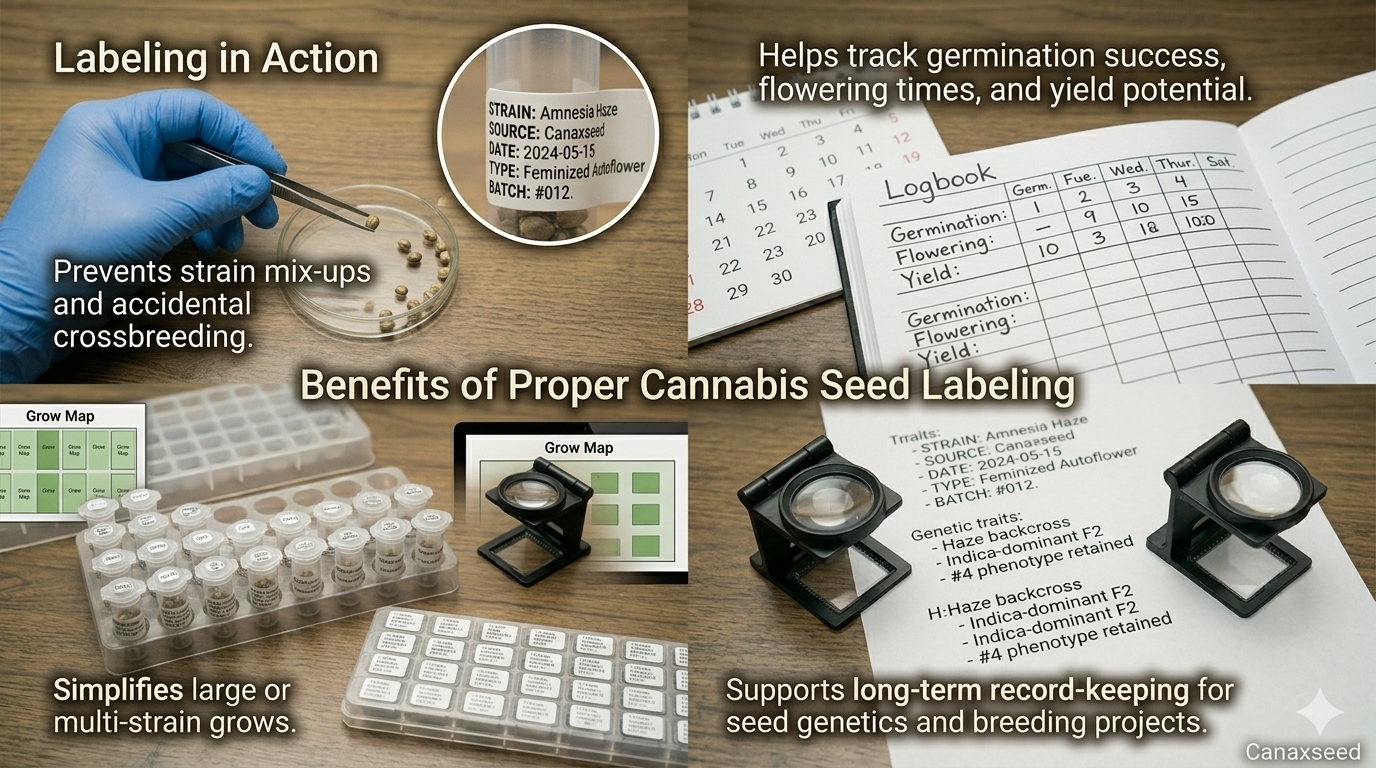
- Prevents strain mix-ups and accidental crossbreeding.
- Helps track germination success, flowering times, and yield potential.
- Simplifies large or multi-strain grows.
- Supports long-term record-keeping for seed genetics and breeding projects.
Final Thoughts
Labeling cannabis seeds may seem like a minor step, but it has a major impact on organization, germination success, and overall grow efficiency. By using consistent, detailed labels, color coding, and clear storage practices, growers can avoid confusion, track strain genetics, and ensure every seed reaches its full potential. Proper labeling is especially important when handling autoflower, feminized, or CBD seeds, as early mistakes can affect the entire growth cycle.