
Growing Education
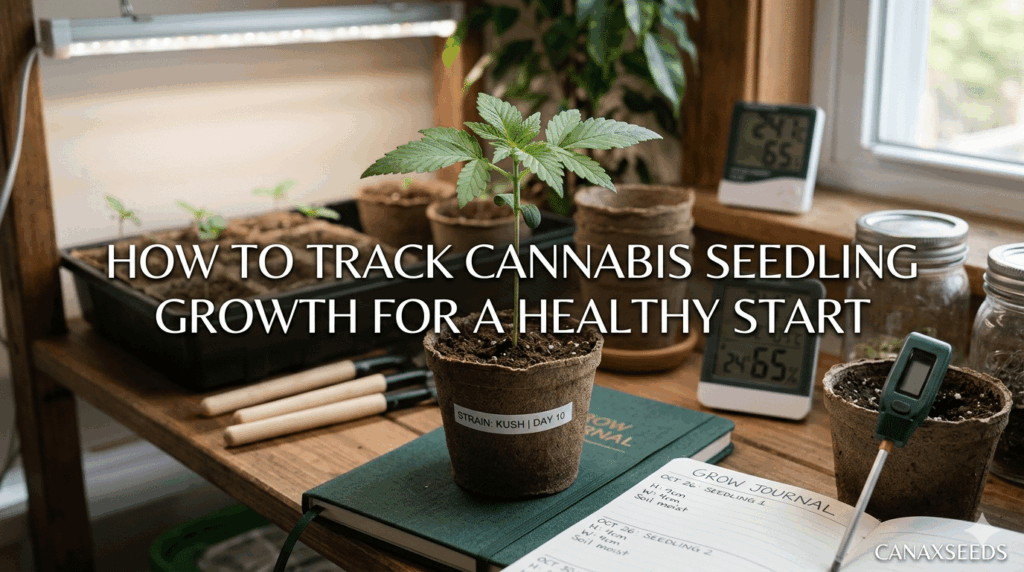
How to Track Cannabis Seedling Growth for a Healthy Start
01
May
May
Why Tracking Seedling Growth Matters
Monitoring cannabis seedlings from germination to early vegetative growth is critical for producing strong, healthy plants. Tracking growth helps identify issues early, such as nutrient deficiencies, overwatering, or slow development. For autoflower, feminized, and CBD seeds, careful tracking ensures each plant receives the proper care and achieves its full potential. Consistent observation also allows growers to predict harvest timelines, maintain strain consistency, and reduce losses from weak or non-viable seedlings.Signs You Should Track Seedling Growth
- Slow or uneven sprouting across autoflower, feminized, or CBD seeds.
- Early signs of stem stretching, leaf curling, or discoloration.
- Multiple strains in the same grow area that require individual attention.
- Wanting to measure growth progress for record-keeping or future grows.
How to Track Cannabis Seedling Growth
1. Set Up a Growth Log
- Use a notebook, spreadsheet, or mobile app to record observations.
- Include columns for strain type, seed type, germination date, taproot emergence, leaf development, and transplant dates.
- Keeping organized records helps identify patterns and prevent recurring mistakes.
2. Measure Seedling Height
- Measure seedlings daily or every few days from soil surface to the top of the newest leaves.
- Note differences between autoflower, feminized, and CBD seedlings. Autoflowers may grow faster initially, while feminized seedlings may require more attention to maintain uniform height.
3. Observe Leaf Development
- Track the number of cotyledons and true leaves.
- Note leaf color and shape—yellowing, curling, or spotting can indicate nutrient issues or stress.
- Consistent leaf development is a strong indicator of healthy seedlings.
4. Monitor Root Growth (If Possible)
- For seedlings in starter plugs or transparent containers, gently observe taproot development.
- Strong, white taproots indicate good early growth and proper hydration.
- Avoid disturbing the roots of seedlings in soil unless necessary.
5. Record Environmental Conditions
- Note temperature, humidity, light intensity, and watering schedule.
- Adjust conditions based on seedling response to prevent stress, damping-off, or slow growth.
Tips for Autoflower, Feminized, and CBD Seedlings
- Autoflower seedlings: Track growth carefully since their flowering cycle starts automatically. Quick intervention helps maintain uniform development.
- Feminized seedlings: Record germination and early growth to ensure consistent female plants for photoperiod-controlled environments.
- CBD seedlings: Monitoring early growth helps preserve cannabinoid profiles and medicinal qualities.
Benefits of Tracking Seedling Growth
- Early detection of problems such as overwatering, nutrient deficiencies, or mold.
- Better planning for transplanting, lighting adjustments, and feeding schedules.
- Consistent, uniform growth for multi-strain grows.
- Improved overall yield and plant health.
Common Mistakes to Avoid
- Ignoring daily changes in seedling development.
- Not recording environmental factors alongside growth data.
- Treating all seedlings identically, regardless of strain or seed type.
- Overhandling seedlings while measuring or observing roots.
Final Thoughts
Tracking cannabis seedling growth is a simple, low-cost practice that ensures CBD, feminized, and autoflower seeds develop strong, healthy roots and leaves. By monitoring height, leaf development, root health, and environmental conditions, growers can identify issues early, reduce losses, and achieve uniform growth. Proper tracking lays the foundation for robust plants, higher yields, and a more successful overall grow cycle.